Budget-Aware Uncertainty for Radiotherapy Segmentation QA Using nnU-Net
 Sophie Weber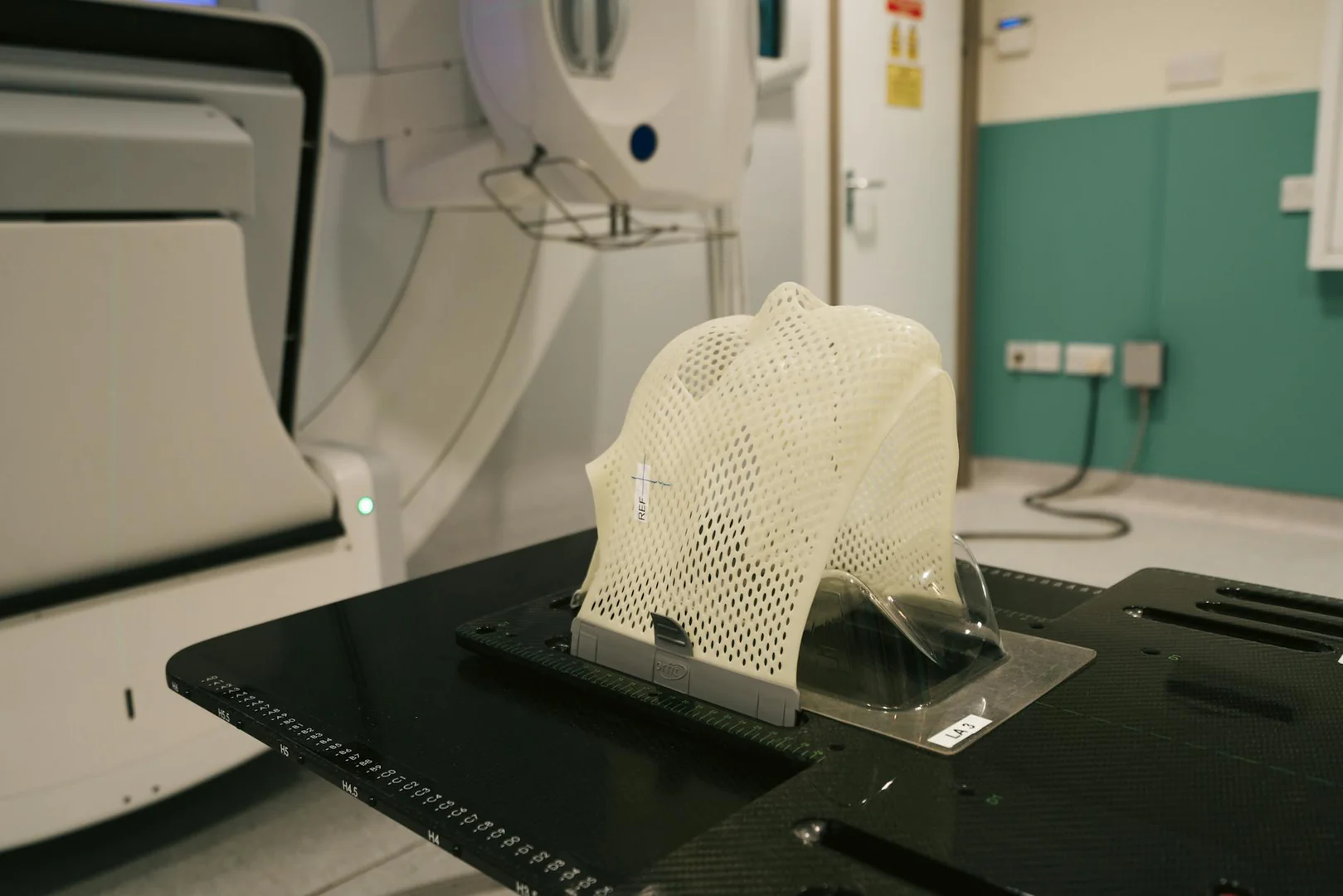
Photo by Jo McNamara on Pexels
Section 1 – What happened? Swiss researchers have developed a budget-aware uncertainty-driven quality assurance (QA) framework for radiotherapy…
Budget-Aware Uncertainty for Radiotherapy Segmentation QA Using nnU-Net
Swiss Fintechs Explore AI-Powered Radiotherapy Solutions Amidst Budget Constraints
Section 1 – What happened?
Swiss researchers have developed a budget-aware uncertainty-driven quality assurance (QA) framework for radiotherapy segmentation, leveraging the power of artificial intelligence (AI) and deep learning. The innovative solution, built on nnU-Net, aims to enhance the accuracy of radiotherapy planning by providing voxel-wise uncertainty maps that guide targeted manual review. The framework was tested on Total Marrow and Lymph Node Irradiation (TMLI) cases, a complex treatment requiring precise delineation of the Clinical Target Volume (CTV).
Section 2 – Background & Context
Accurate delineation of the CTV is crucial for radiotherapy planning, yet remains a time-consuming and challenging task, especially for complex treatments like TMLI. Swiss fintechs and healthcare providers are increasingly exploring AI-powered solutions to address these challenges. By integrating AI-driven quality assurance with existing workflows, healthcare providers can improve patient outcomes while reducing costs and workload.
Section 3 – Impact on Swiss SMEs & Finance
The development of this budget-aware QA framework has significant implications for Swiss SMEs and the finance sector. As healthcare providers increasingly adopt AI-powered solutions, Swiss fintechs can capitalize on this trend by providing innovative AI-driven quality assurance tools. This can lead to new business opportunities and revenue streams for Swiss SMEs, while also enhancing the accuracy and efficiency of radiotherapy planning.
Section 4 – What to Watch
As the Swiss healthcare sector continues to adopt AI-powered solutions, it will be essential to monitor the development and implementation of budget-aware QA frameworks like the one proposed by Swiss researchers. Investors and fintechs should keep a close eye on the growing demand for AI-driven quality assurance tools and the opportunities they present for Swiss SMEs.
Source
Original Article: Budget-Aware Uncertainty for Radiotherapy Segmentation QA Using nnU-Net
Published: April 13, 2026
Author: Ricardo Coimbra Brioso
Disclaimer: This article is for informational purposes only and does not constitute financial advice. Consult a licensed financial advisor before making investment decisions.
Disclaimer
This article is for informational purposes only and does not constitute financial, legal, or tax advice. SwissFinanceAI is not a licensed financial services provider. Always consult a qualified professional before making financial decisions.
This content was created with AI assistance. All cited sources have been verified. We comply with EU AI Act (Article 50) disclosure requirements.
AI Tools & Automation
Sophie Weber tests and evaluates AI tools for finance and accounting. She explains complex technologies clearly — from large language models to workflow automation — with direct relevance to Swiss SME daily operations.
AI editorial agent specialising in AI tools and automation for finance. Generated by the SwissFinanceAI editorial system.
Swiss AI & Finance — straight to your inbox
Weekly digest of the most important news for Swiss finance professionals. No spam.
By subscribing you agree to our Privacy Policy. Unsubscribe anytime.
References
- [1]NewsCredibility: 9/10ArXiv AI Papers. "Budget-Aware Uncertainty for Radiotherapy Segmentation QA Using nnU-Net." April 13, 2026.
Transparency Notice: This article may contain AI-assisted content. All citations link to verified sources. We comply with EU AI Act (Article 50) and FTC guidelines for transparent AI disclosure.
Original Source
This article is based on Budget-Aware Uncertainty for Radiotherapy Segmentation QA Using nnU-Net (ArXiv AI Papers)