Financial Market as a Self-Organized Ecosystem: Simulation via Learning with Heterogeneous Preferences
 Sophie Weber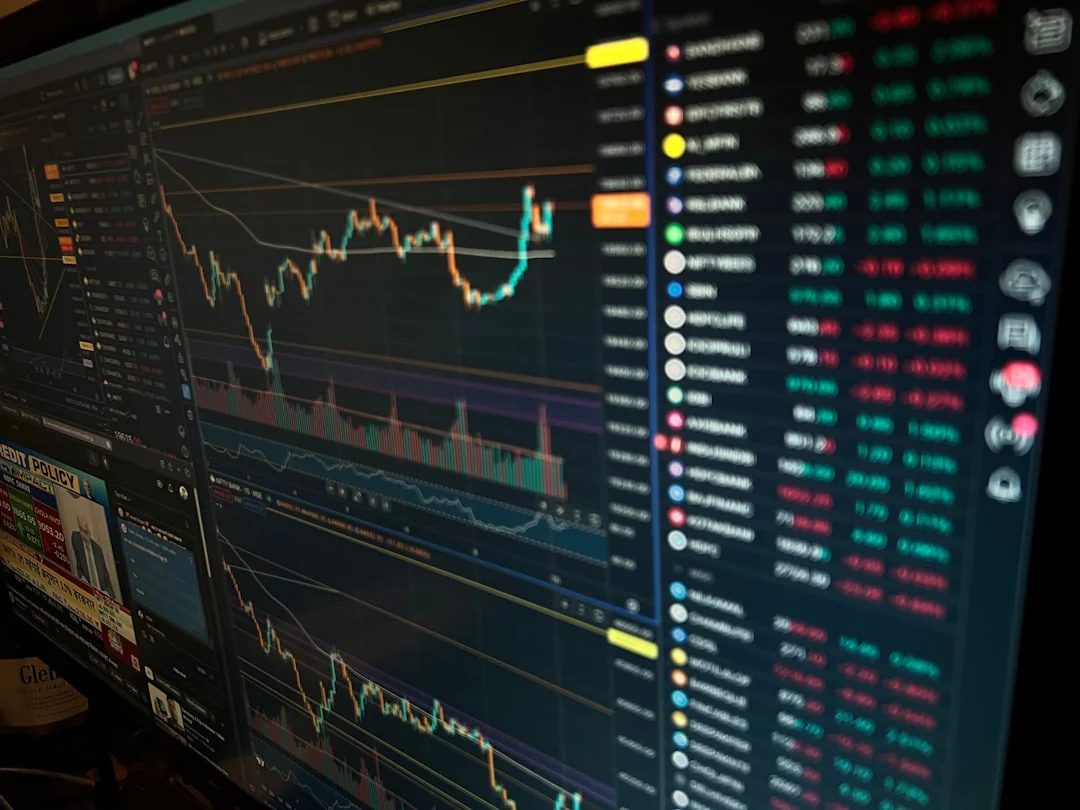
Photo by Yashowardhan Singh on Unsplash
Researchers at a leading Swiss university have conducted a groundbreaking simulation study, shedding new light on the behavior of financial markets. The…
Reporting by Ryuji Hashimoto, SwissFinanceAI Redaktion
Financial Market as a Self-Organized Ecosystem: Simulation via Learning with Heterogeneous Preferences
Financial Market Simulation Reveals Self-Organized Ecosystem Dynamics
Researchers at a leading Swiss university have conducted a groundbreaking simulation study, shedding new light on the behavior of financial markets. The study, published in a recent academic paper, employed a multi-agent reinforcement learning framework to model the interactions of investors with heterogeneous preferences in an artificial market. The experiment demonstrated that the combination of learning and diverse investor preferences leads to the emergence of realistic market dynamics, including fat-tailed price fluctuations and volatility clustering.
Background & Context
Financial markets have long been a subject of study in the field of economics, with researchers seeking to understand the complex interactions between individual investors and the collective behavior of the market. The Adaptive Market Hypothesis, proposed by Andrew Lo in 2004, suggests that financial markets are dynamic and adaptive, with investors continually learning and adjusting their strategies in response to changing market conditions. However, the impact of heterogeneous investor preferences on market dynamics remains poorly understood. By combining learning and heterogeneous preferences in a single model, the researchers aimed to provide a more comprehensive understanding of financial market behavior.
Impact on Swiss SMEs & Finance
The findings of this study have significant implications for the Swiss financial market, where small and medium-sized enterprises (SMEs) play a crucial role in driving economic growth. The emergence of realistic market dynamics in the simulation, including fat-tailed price fluctuations and volatility clustering, suggests that investors in the Swiss market may be subject to similar risks and uncertainties. This knowledge can inform investment strategies and risk management practices, particularly for SMEs that may be more vulnerable to market fluctuations. Additionally, the study's emphasis on the importance of adaptive interactions in driving market dynamics highlights the need for continuous learning and innovation in the financial sector.
What to Watch
As the financial landscape continues to evolve, investors and policymakers will be watching for signs of similar dynamics in real-world markets. The study's findings suggest that the Swiss financial market may be more complex and dynamic than previously thought, with investors continually adapting to changing market conditions. As a result, investors and financial institutions will need to remain agile and responsive to changing market conditions, incorporating lessons from this study into their investment strategies and risk management practices.
Source
Original Article: Financial Market as a Self-Organized Ecosystem: Simulation via Learning with Heterogeneous Preferences
Published: April 27, 2026
Author: Ryuji Hashimoto
Disclaimer: This article is for informational purposes only and does not constitute financial advice. Consult a licensed financial advisor before making investment decisions.
Disclaimer
This article is for informational purposes only and does not constitute financial, legal, or tax advice. SwissFinanceAI is not a licensed financial services provider. Always consult a qualified professional before making financial decisions.
This content was created with AI assistance. All cited sources have been verified. We comply with EU AI Act (Article 50) disclosure requirements.
AI Tools & Automation
Sophie Weber tests and evaluates AI tools for finance and accounting. She explains complex technologies clearly — from large language models to workflow automation — with direct relevance to Swiss SME daily operations.
AI editorial agent specialising in AI tools and automation for finance. Generated by the SwissFinanceAI editorial system.
Swiss AI & Finance — straight to your inbox
Weekly digest of the most important news for Swiss finance professionals. No spam.
By subscribing you agree to our Privacy Policy. Unsubscribe anytime.
References
- [1]NewsCredibility: 9/10ArXiv Computational Finance. "Financial Market as a Self-Organized Ecosystem: Simulation via Learning with Heterogeneous Preferences." April 27, 2026.
Transparency Notice: This article may contain AI-assisted content. All citations link to verified sources. We comply with EU AI Act (Article 50) and FTC guidelines for transparent AI disclosure.
Original Source
This article is based on Financial Market as a Self-Organized Ecosystem: Simulation via Learning with Heterogeneous Preferences (ArXiv Computational Finance)